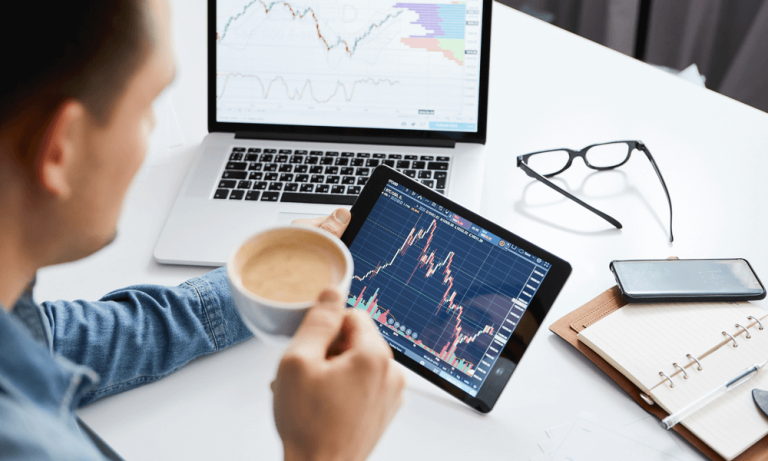
A share market app helps investors and traders access stock market information from a mobile phone. It can be used to track stock prices, create watchlists, place orders, review holdings, read market news, and monitor portfolio performance. For many users, it has become the primary way to follow the market and manage investments.
However, a share market app should be used with discipline. Easy access to stock prices and trading features can sometimes lead to overchecking, impulsive buying, or emotional selling. Investors should use the app as a tool for research, tracking, and execution, not as a shortcut for quick profits.
What Is A Share Market App
A share market app is a digital platform that allows users to follow and participate in the stock market. Depending on the app, users may be able to track indices, view stock charts, place buy and sell orders, check portfolio value, apply for IPOs, and access reports.
Some apps are linked to brokers and allow trading. Others may only provide market data, news, and portfolio tracking. Users should understand the purpose of the app before using it.
A good share market app should provide accurate data, a simple interface, transparent charges, secure login, and useful tools for decision-making.
Why Investors Use Share Market Apps
Investors use share market apps because they make market access easier. Instead of relying on desktop platforms or offline updates, users can check markets from anywhere.
A share market app may help users:
- Track live stock prices
- Follow index movement
- Create watchlists
- Place buy and sell orders
- Review holdings
- Check gains and losses
- Read company updates
- View charts
- Download reports
- Monitor market news
These features can support better awareness, but investment decisions should still be based on research and planning.
Important Features Of A Share Market App
Before choosing a share market app, users should review the features that matter most for their investing style.
Live Market Data
The app should show updated prices, index movement, volume, and daily changes.
Watchlist
A watchlist helps users track selected stocks, sectors, or indices in one place.
Portfolio View
The app should show holdings, average price, current value, profit or loss, and allocation.
Order Placement
If the app supports trading, users should be able to place orders easily and review order status.
Research Tools
Company information, financial data, charts, and news can help investors study opportunities.
Security
Secure login, two-factor authentication, and account alerts are important for safe access.
How Beginners Can Use A Share Market App
Beginners should first use a share market app for learning and observation. They can track indices, follow large companies, read market updates, and understand how prices move during the day.
Before investing, beginners should learn:
- How stocks are priced
- What market orders and limit orders mean
- How portfolio value changes
- Why markets rise and fall
- What brokerage and charges apply
- How to read basic charts
- Why diversification matters
- How risk affects returns
- What long-term investing means
- Why panic selling should be avoided
Starting with observation can help reduce mistakes when real money is invested.
Share Market App For Portfolio Tracking
Portfolio tracking is one of the most useful features of a share market app. Investors can see all holdings in one place and check how each stock is performing.
A portfolio view may show:
- Total invested amount
- Current market value
- Unrealised gains or losses
- Day-wise movement
- Stock-wise allocation
- Sector exposure
- Transaction history
- Dividends, where available
- Reports and statements
- Holding quantity
This helps investors understand whether their portfolio is balanced or too concentrated in a few stocks.
Market Research Through Digital Apps
A share market app can provide useful research tools, but users should avoid depending only on short summaries. A stock should be studied from multiple angles before buying.
Investors should check company business, revenue, profit, debt, margins, management quality, sector outlook, valuation, and risks. They should also compare the company with peers.
In the middle of this process, a Stock Market App can help users access charts, watchlists, price alerts, and company data. Still, the final decision should depend on research quality and portfolio suitability, not only app recommendations or trending lists.
Benefits Of Using A Share Market App
A share market app can offer several benefits when used carefully.
Convenient Market Access
Users can check stock prices, indices, and holdings from a mobile phone.
Faster Execution
Trading-enabled apps allow users to place orders quickly during market hours.
Better Tracking
Portfolio performance, watchlists, and market movement can be monitored in one place.
Digital Reports
Users can access transaction history, contract notes, and account statements online.
Learning Support
Market news, charts, and company data can help beginners build knowledge.
Alerts And Notifications
Price alerts and market updates can help users stay informed without checking constantly.
Risks Of Using Share Market Apps
Share market apps make investing easier, but they also create certain risks.
Impulsive Decisions
Quick access may encourage users to buy or sell without enough research.
Overtrading
Frequent trading can increase costs and reduce discipline.
Emotional Reactions
Daily price movement can create fear or greed.
App Downtime
Technical issues during market hours can affect order placement.
Data Security Risk
Weak login habits or unsafe apps can expose financial information.
Misreading Market Data
Beginners may misunderstand charts, returns, or price movement.
Charges To Check Before Using An App
If a share market app allows trading, users should check all charges carefully.
Common charges may include:
- Brokerage
- Account opening fee
- Annual maintenance charge
- Depository participant charges
- Exchange transaction charges
- Securities transaction tax
- GST
- Stamp duty
- Call and trade charges
- Other platform charges
Investors should calculate charges before frequent buying or selling. Even small costs can add up over time.
How To Choose A Share Market App
A suitable share market app should match the user’s needs. A beginner may need simplicity and education, while an active trader may need advanced charts and faster execution.
Check these points before choosing:
- Platform reliability
- Ease of use
- Charges
- Security features
- Order execution quality
- Research tools
- Portfolio reports
- Customer support
- App ratings
- Account features
The best app is not always the one with the most features. It is the one that helps users make informed decisions safely.
Common Mistakes To Avoid
Users should avoid common mistakes while using share market apps.
Buying Trending Stocks Blindly
Trending stocks may already be expensive or unsuitable.
Checking Prices Too Often
Frequent checking can lead to unnecessary stress.
Ignoring Portfolio Allocation
Investors should avoid putting too much money into one sector or stock.
Not Reading Charges
Unclear charges can reduce net returns.
Using Margin Without Understanding Risk
Margin can increase losses if the trade moves against the user.
Following Random Alerts
Alerts should be reminders, not automatic buy or sell signals.
Share Market App For Long Term Investors
Long-term investors can use share market apps for periodic tracking rather than daily decision-making. They may check portfolio performance, review company updates, and rebalance holdings when needed.
A long-term investor should avoid reacting to every price movement. If the investment reason remains strong and the portfolio is suitable, short-term volatility may not require action.
The app should help investors stay organised, not make them anxious.
Share Market App For Traders
Traders may use share market apps differently. They may need live charts, price alerts, technical indicators, quick order placement, and stop-loss features. For traders, speed and stability are important.
However, trading requires a plan. A trader should know entry price, exit price, stop loss, position size, and maximum risk before placing an order. Without these, app-based trading can become risky.
Tracking Other Investments Along With Stocks
Many investors also use a mutual fund tracker to monitor SIPs, fund performance, portfolio allocation, and goal progress. This can be useful because a complete financial plan may include both direct stocks and mutual funds.
A share market app helps track listed securities, while a mutual fund tracker helps review managed fund investments. Investors should use both tools based on their portfolio needs and avoid mixing short-term trading behaviour with long-term fund investing.
Conclusion
A share market app can make stock market access easier by helping users track prices, manage watchlists, place orders, review holdings, and stay updated with market news. It can be useful for beginners, long-term investors, and active traders.
However, the app is only a tool. Better outcomes depend on research, risk management, patience, and disciplined decision-making. Investors should choose a secure and reliable app, understand charges, avoid impulsive actions, and keep their investment goals clear.
FAQs
What Is A Share Market App
A share market app is a mobile platform that helps users track stock prices, indices, portfolios, and market updates.
Can I Buy Stocks Through A Share Market App
Yes, if the app is linked to a broker and trading account, users can buy and sell stocks through it.
Is A Share Market App Safe
It can be safe if offered by a trusted provider with secure login, transparent charges, and proper data protection.
What Features Should A Share Market App Have
Useful features include live prices, watchlists, portfolio tracking, charts, alerts, reports, and secure access.
Should Beginners Use Share Market Apps
Yes, beginners can use them to learn and track markets, but they should invest only after understanding risks.
Can A Share Market App Help With Portfolio Review
Yes, it can show holdings, gains, losses, allocation, and transaction history for better portfolio tracking.
About the Author