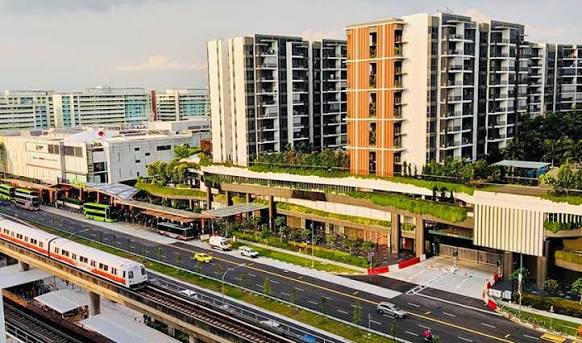
Public transport is an important part of daily life in Singapore, particularly for homeowners who regularly travel between different parts of the island. While a property’s design, facilities and interior space can influence the appeal of a home, convenient transportation can have an equally significant effect on everyday routines.
For prospective buyers, understanding how a residential location connects to the wider transport network can make property research more practical. Instead of looking only at whether a development is near an MRT station, it is worth considering how transportation fits into the household’s actual schedule, destinations and lifestyle.
Why Connectivity Matters in Daily Life
A typical weekday can involve several journeys. A resident may travel from home to work, collect children from school, stop at a supermarket and meet friends before returning home. The convenience of these journeys can influence how much time is spent travelling and how flexible the day feels.
This is why transportation should be assessed as part of the overall residential experience.
A well-connected neighbourhood may provide multiple options for reaching different destinations. MRT services can be useful for longer journeys, while buses and walking routes can help with shorter trips. Road connectivity may also matter for households that drive regularly or use private-hire services.
When researching Dorset Gardens, buyers can consider how its location fits into their usual travel patterns rather than looking at transport access as an isolated feature.
Think About Your Main Destinations
The most useful transportation assessment is personal.
Start by identifying the places you visit most often. Your workplace may be the most important destination, but it is unlikely to be the only one. Parents may need to travel to schools, childcare centres or tuition facilities. Others may regularly visit family members, medical facilities, shopping centres or recreational destinations.
Once these locations are listed, compare how easily they can be reached from a potential home.
This approach can produce a more realistic assessment than simply counting nearby stations or bus stops. A location with excellent connectivity to one part of Singapore may not necessarily be the most convenient for someone whose regular activities are concentrated elsewhere.
MRT Access Is Only One Part of the Picture
MRT connectivity often receives significant attention in property searches, but transportation should be considered more broadly.
Bus routes can be particularly useful for neighbourhood journeys where an MRT station is not the most direct option. Walking accessibility can also make a difference, especially for short trips to shops, food outlets or community facilities.
For drivers, major roads and expressway access may be relevant. However, buyers should consider actual traffic conditions and their normal travel times rather than assuming that proximity to a major road automatically means faster journeys.
The goal is to understand the complete transportation network surrounding a property.
Consider Different Household Members
Transportation requirements can vary significantly within the same household.
One family member might commute towards the city every weekday, while another works in a different region. Children may have separate school schedules, and older family members may prefer shorter walking distances or simpler public transport connections.
A location that accommodates these different routines can make household logistics easier.
This is particularly relevant for families comparing different parts of Singapore. Instead of asking which neighbourhood has the most convenient transport in general, consider which location provides practical options for the people who will actually live there.
Look Beyond the Weekday Commute
Transportation is not only about getting to work.
Weekend activities can involve trips to shopping centres, restaurants, parks, entertainment venues and relatives’ homes. Some residents may also travel frequently for sports, hobbies or community activities.
A neighbourhood with several transport options can provide greater flexibility for these activities.
For someone considering Clovelle of Woodlands, for example, it can be useful to examine the wider Woodlands area and understand how its transport network connects residents with other parts of Singapore. Looking at everyday routes rather than focusing on a single destination gives buyers a more complete perspective.
Consider Convenience for Different Age Groups
A home’s transport environment can also become more important as household circumstances change.
Young adults may be comfortable making longer journeys with multiple transfers. Families with young children may prefer simpler routes. Older residents may place greater value on convenient access to healthcare services, shops and community facilities.
These considerations can influence the long-term practicality of a home.
Buyers do not need to predict every future change, but they can consider whether the location provides enough flexibility for different stages of life.
Test the Journey Yourself
Property research conducted entirely online can only provide part of the picture. If transportation is an important consideration, try making some of the key journeys yourself.
Travel from the potential home to your workplace during a normal commuting period. If children will be living in the property, consider the route to their regular destinations. Try the journey at a realistic time rather than during a quiet period.
Pay attention to more than the travel duration. Consider transfers, walking distances, waiting times and how comfortable the journey feels.
This exercise can reveal practical details that may not be obvious from a map.
Think About Convenience During Bad Weather
Singapore’s weather can also influence how residents experience transportation.
A short outdoor walk may feel very different during heavy rain or intense afternoon heat. Families with young children may find covered walkways particularly useful, while residents carrying groceries may prefer convenient connections between transport points and home.
This is one reason why physically visiting a neighbourhood can be valuable. Maps can show distances, but they cannot fully communicate how a route feels in real conditions.
Avoid Choosing a Home Based on One Transport Feature
It can be tempting to place too much emphasis on a single feature, such as MRT proximity. However, transportation is only one part of a property’s overall suitability.
A home should also be assessed in relation to its layout, surrounding amenities, household needs, budget and preferred lifestyle.
For example, excellent rail connectivity may be less important to someone who works from home and spends most of their time within the neighbourhood. Conversely, a frequent commuter may place much greater importance on efficient connections.
The right priorities depend on the individual buyer.
Make Transportation Part of the Bigger Decision
Transport connectivity can influence how residents experience their homes every day. It affects commuting, school runs, errands, social activities and access to different parts of Singapore.
When comparing developments such as Dorset Gardens and Clovelle of Woodlands, buyers can therefore examine transportation from the perspective of their own routines rather than relying on general assumptions about a neighbourhood.
A useful property search considers where you need to go, how often you travel and which transport options you are comfortable using. By testing important routes and examining the wider network, prospective homeowners can make their research more practical.
Ultimately, good connectivity is not simply about being close to a transport facility. It is about having transportation options that support the way you live.
About the Author