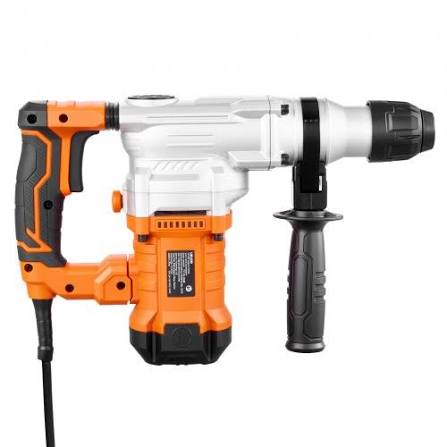
Choosing the right power tool for a job is rarely straightforward, especially when the task involves concrete, masonry, or reinforced materials. For contractors and experienced tradespeople, the drill in their hands can determine how productive a workday becomes. SDS drills have earned their place on job sites around the world because of how efficiently they handle the toughest drilling and chiseling tasks. Understanding the features that separate a capable machine from a poor investment will help any tradesperson make a smarter, more informed choice.
What Makes SDS Technology Different From Conventional Drilling
The core distinction of SDS technology lies in how the drill bit is retained and driven. Unlike traditional chucks that grip a bit through mechanical clamping, SDS systems use a slotted shank design that allows the bit to slide back and forth within the chuck. This motion adds a hammering action to the rotary drilling, which is exactly what drives the tool through concrete and brick with much less physical effort from the operator.
This built-in impact mechanism separates SDS tools from standard rotary drills, which rely entirely on torque. The result is faster penetration, reduced heat buildup in the bit, and significantly less user fatigue over long working sessions. For tradespeople who spend hours drilling into hard substrates, that difference is felt in their wrists and shoulders by the end of the day.
Why the Hammering Mechanism Deserves Careful Evaluation
Not all hammering systems deliver the same performance. The impact energy produced per blow—measured in joules—determines how effectively the tool can work through dense materials. A tool with higher impact energy will penetrate reinforced concrete more efficiently than one with lower output, even if both tools appear similar on the surface.
When evaluating this feature, tradespeople should also consider the blow frequency, which describes how many impacts the tool delivers per minute. A combination of strong single-blow impact and a high blow rate produces the most efficient drilling action. Tools that fall short in either category may feel underpowered when the work gets difficult, leading to slower progress and unnecessary strain on the machine.
How Chuck Size Influences Your Tool Selection
SDS tools are generally available in two main chuck formats: SDS-Plus and SDS-Max. These are not interchangeable, and understanding the difference is important before committing to a purchase.
SDS-Plus is the more compact format and accepts bits with a smaller shank diameter. This format is widely used for lighter masonry work and is the most common choice for general tradespeople working on residential and light commercial projects. The tooling is widely available, competitively priced, and compatible with a broad range of accessories.
SDS-Max uses a larger shank and is designed for heavy-duty applications. Demolition contractors, civil construction workers, and those regularly working with very thick concrete or stone will find SDS-Max tools more appropriate for their needs. The added mass and power delivery are built specifically for sustained, demanding use. Selecting the wrong format for the job will either leave you underpowered or carrying unnecessary weight on a site where a lighter tool would have performed just as well.
The Role of Operating Modes in Versatility
A well-specified SDS tool typically offers multiple operating modes, and this versatility adds meaningful value on a busy job site. The three most common modes are rotary drilling, hammer drilling, and chisel-only mode.
Rotary-only mode removes the hammering action and allows the tool to function like a standard drill. This is useful when working with wood, metal, or other materials that would be damaged by the impact mechanism. Hammer drilling engages both the rotation and the hammering simultaneously, which is the primary mode for masonry work. Chisel mode locks the bit in a fixed position without rotation, converting the tool into a light demolition instrument capable of breaking tiles, chipping mortar, or shaping soft stone.
The ability to switch between these modes quickly and reliably on site, without needing additional tools or adjustment, is a feature that experienced tradespeople will always appreciate.
Ergonomics and Weight Distribution Matter More Than Most Buyers Expect
A tool’s power output means very little if the operator cannot handle it comfortably for extended periods. Weight, balance, grip design, and vibration management all contribute to how physically demanding a tool is to use throughout a full working day.
Vibration reduction technology has become an important consideration in this category. Prolonged exposure to vibration from power tools is a recognized occupational health concern, and many better-specified tools now include internal damping systems that absorb a portion of the vibration before it reaches the operator’s hands. This does not eliminate vibration entirely, but it reduces cumulative exposure meaningfully over long shifts.
Handle design also plays a role. A well-positioned side handle gives the operator better control over the drill, particularly when applying the force needed to guide the bit through hard material. Some tools offer adjustable handle positions, allowing the grip angle to be customized based on the drilling direction or the operator’s preference.
Battery Platform Compatibility for Cordless Models
Cordless SDS drills have improved considerably and now deliver performance that closely rivals their corded counterparts in many real-world applications. For tradespeople already invested in a cordless tool ecosystem, battery platform compatibility becomes a critical consideration.
Using batteries from an existing platform eliminates the need to manage multiple chargers and battery types on site. It also reduces the capital investment required when adding a new tool to the kit. Before purchasing a cordless SDS drill, it is worth confirming that the battery voltage and platform align with other tools already in use.
Making the Right Decision for Your Work
The best SDS tool for any tradesperson is the one that aligns most closely with the type of work they do most often. A plumber drilling anchor points through brick walls has different requirements than a demolition contractor breaking up a concrete floor. Evaluating impact energy, chuck format, operating modes, ergonomics, and battery compatibility together—rather than focusing on any single specification—will consistently lead to a better purchasing decision. Investing time in this evaluation upfront saves both money and frustration over the life of the tool.
About the Author
